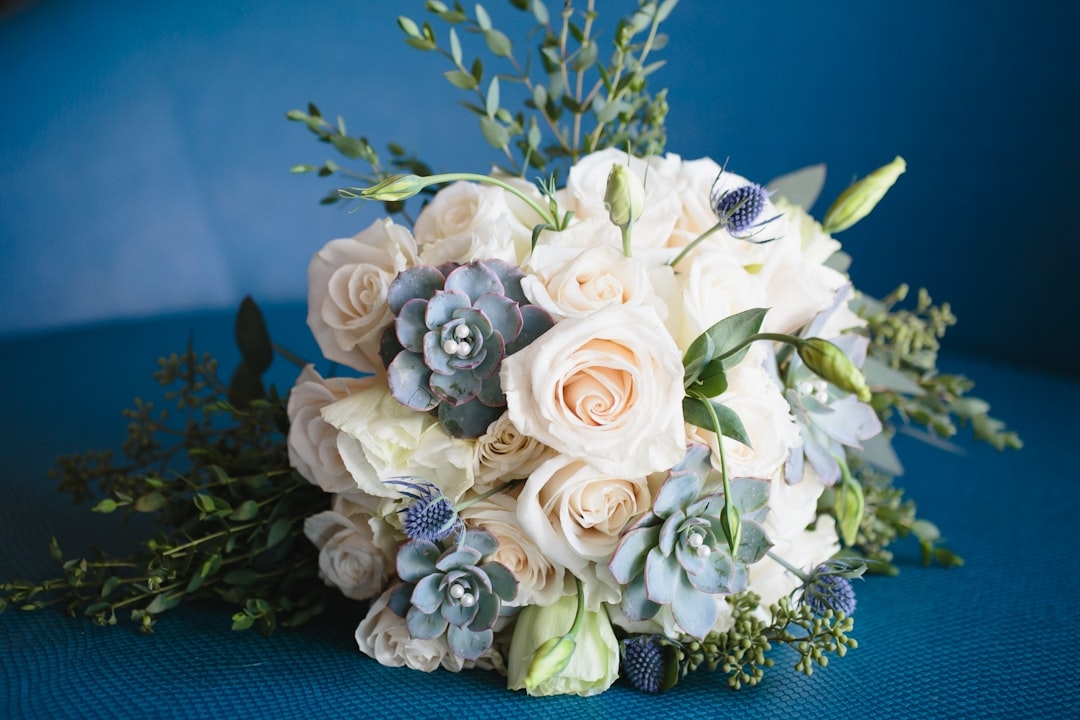
Contents:
- The Historical Roots of White Roses at Weddings
- Core White Roses Wedding Meaning: What They Represent Today
- Purity and Innocence
- New Beginnings
- Eternal and Spiritual Love
- Unity and Togetherness
- Regional Traditions Across the United States
- Choosing the Right White Rose Variety for Your Wedding
- How to Use White Roses Meaningfully in Your Ceremony
- The Unity Rose Ceremony
- Rose Petal Aisle
- Memorial Table Tribute
- Common Mistakes to Avoid
- Frequently Asked Questions
- What do white roses symbolize at a wedding?
- Are white roses appropriate for all wedding styles?
- What is the difference between white roses and ivory roses at a wedding?
- Can white roses be used for a non-traditional wedding?
- How many white roses do I need for a wedding centerpiece?
- Plan Your White Rose Arrangements with Intention
You’re standing in a flower market on a Saturday morning, stems of white roses in hand, trying to remember exactly why you chose them for your centerpieces. Your mother said they were “classic.” Your florist called them “timeless.” But neither of them explained what white roses actually mean — and for a DIY wedding planner who wants every detail to be intentional, that matters.
White roses carry centuries of layered symbolism. Understanding that symbolism helps you make smarter design decisions, arrange them with purpose, and — if someone asks — actually answer the question with confidence. The white roses wedding meaning runs deeper than aesthetics, and it’s worth knowing before you order your first bulk box.
The Historical Roots of White Roses at Weddings
The association between white roses and marriage predates the Instagram flat lay by roughly 2,000 years. Ancient Romans connected white roses to Venus, goddess of love, and used them during wedding ceremonies as symbols of new beginnings and faithful commitment. In medieval Europe, the white rose symbolized purity and secrecy — hence the Latin phrase sub rosa, meaning “under the rose,” which was used to indicate confidentiality in formal gatherings.
By the Victorian era, flower symbolism — or “floriography” — became a sophisticated social language. White roses specifically were assigned meanings of innocence, worthiness, and spiritual love. Brides in 19th-century England carried white rose bouquets not just for beauty, but to communicate these values to wedding guests who understood the floral code. Queen Victoria herself carried a bouquet of white snowdrops and orange blossoms at her 1840 wedding, further cementing white flowers as the bridal standard in Western culture.
Core White Roses Wedding Meaning: What They Represent Today
Modern couples draw on a rich layered vocabulary when they choose white roses. These aren’t arbitrary associations — each meaning has a traceable cultural or historical origin.
Purity and Innocence
This is the oldest and most persistent meaning. White as a color has symbolized purity across cultures — from ancient Greek and Roman religious ceremonies to Japanese Shinto wedding rituals. In the context of marriage, purity doesn’t strictly mean what Victorian society implied. Today it more often refers to a clean slate: the start of something untainted by past conflict or hardship. Many couples specifically choose white roses for this reason — to symbolize a fresh chapter.
New Beginnings
White roses are one of the most widely used symbols of new beginnings across life events. In weddings, this meaning resonates particularly well with couples who are marrying later in life, blending families, or remarrying. The blank-canvas quality of white communicates openness and hope — a willingness to begin something together without predetermined outcomes.
Eternal and Spiritual Love
Unlike red roses, which are tied to passionate, romantic love, white roses represent a love that is enduring and spiritually grounded. This distinction matters for couples with strong religious or spiritual values. Many Catholic, Orthodox Christian, and Hindu wedding ceremonies incorporate white flowers specifically for their associations with the divine and the sacred bond of marriage.
Unity and Togetherness
White absorbs all colors of light — a fact that some florists and ceremony designers use as a metaphor for unity. Two individuals, distinct in background and personality, coming together to form one shared life. This symbolic layer makes white roses especially popular in unity ceremonies, where the couple plants roses together or exchanges single blooms.
Regional Traditions Across the United States
The way white roses are used in weddings varies more by region than most people expect.
In the Northeast — particularly in New England — white roses appear most often in traditional church ceremonies, often paired with greenery like eucalyptus or ivy. Boston and New York florists report consistent year-round demand for white garden roses (like the David Austin varieties) for formal Catholic and Protestant ceremonies. Classic, structured arrangements dominate.
In the South, white roses frequently share the stage with magnolias, gardenias, and white hydrangeas. Southern weddings often embrace a lush, abundant aesthetic — think large cascading bouquets rather than minimalist clusters. In Georgia and Tennessee specifically, white roses are a staple of spring and fall weddings, and are commonly used in corsages and boutonnieres as well as centerpieces.
On the West Coast, the trend skews toward a more organic, garden-style look. White roses are often mixed with wildflowers, dried pampas grass, or ranunculus in a loosely arranged, slightly imperfect style. California florists frequently use varieties like White O’Hara or Mondial roses for their soft, romantic texture rather than the crisp, tightly-petaled look preferred in formal Eastern settings.
Choosing the Right White Rose Variety for Your Wedding
Not all white roses look or behave the same, and variety selection is one of the most practical decisions a DIY couple will make.
- Mondial: A classic florist’s rose with tightly packed petals and a long vase life — ideal for centerpieces that need to last 5–7 days. Average cost: $1.50–$2.50 per stem from wholesale suppliers.
- White O’Hara: A garden rose with a ruffled, full bloom. Shorter vase life (3–5 days) but exceptional fragrance. Best for bouquets assembled day-of.
- Vendela: A cream-white variety with a subtle warmth, popular for blended arrangements with ivory or champagne flowers. Great for fall weddings.
- Akito: A high-petal-count rose with excellent longevity, often used for corsages and boutonnieres due to its compact bloom size.
For DIY arrangements, ordering through a wholesale floral supplier like FiftyFlowers or BloomsyBox typically saves 40–60% compared to retail florist pricing. Order at least 10% more stems than your arrangement count requires, accounting for damaged or unusable blooms.
How to Use White Roses Meaningfully in Your Ceremony
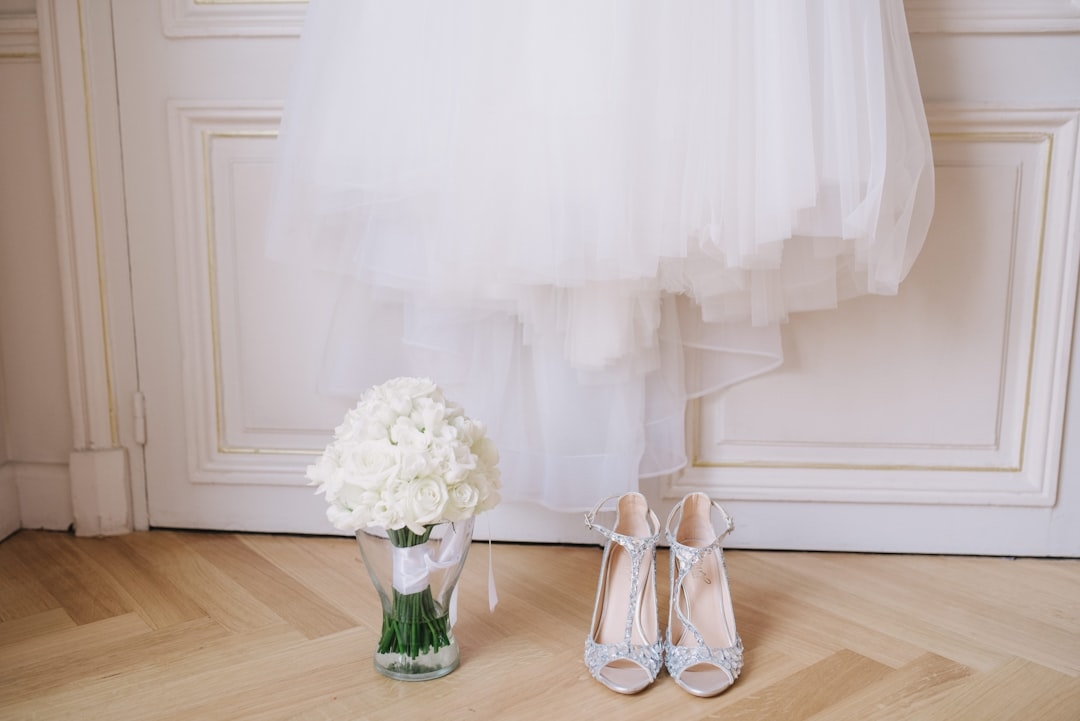
Knowing the symbolism is only useful if you put it to work. Here are specific, intentional ways to incorporate white roses beyond the standard centerpiece.
The Unity Rose Ceremony
Each partner carries a single white rose down the aisle separately, then exchanges them at the altar. This simple ritual requires no officiant script change and communicates the “new beginning” and “unity” symbolism with a clear, visible gesture. The roses can later be pressed and framed.
Rose Petal Aisle
Scatter fresh white rose petals down the ceremony aisle. Budget approximately 1 cup of loose petals per linear foot of aisle. For a 50-foot aisle, that’s roughly 50 cups — or about 8–10 wholesale rose heads per cup, totaling 400–500 stems just for the petals. Dried petals reduce cost significantly and hold up better outdoors.
Memorial Table Tribute
White roses are frequently used on memory tables to honor deceased family members. Their association with spiritual love and eternal connection makes them the most culturally appropriate choice for this purpose across most American traditions.
Common Mistakes to Avoid
- Ordering too early: White roses ordered more than 5 days before the wedding will peak and decline before the ceremony. Coordinate delivery for 2–3 days prior, and store them in a cool location (ideally 35–40°F) in fresh-cut water.
- Mixing warm and cool whites: Cream roses and pure white roses can clash under warm venue lighting. Pull a sample stem under the actual lighting before committing to a mixed arrangement.
- Ignoring stem length: For DIY centerpieces, stems shorter than 18 inches limit your design flexibility. Request stems of at least 20–24 inches from your supplier and cut them yourself to the exact height needed.
- Forgetting conditioning time: Cut roses need 12–24 hours in water before arranging to hydrate fully. Skipping this step leads to wilted arrangements within hours of setup.
- Over-relying on a single variety: Using only one rose variety creates a flat, one-dimensional look. Mixing two white varieties — such as Mondial and White O’Hara — adds depth and texture without introducing color.
Frequently Asked Questions
What do white roses symbolize at a wedding?
White roses symbolize purity, new beginnings, eternal love, and unity. They are one of the most enduring wedding flowers in Western tradition, with symbolic roots tracing back to ancient Roman and Victorian culture.
Are white roses appropriate for all wedding styles?
Yes. White roses work across formal church ceremonies, outdoor garden weddings, minimalist modern celebrations, and rustic barn events. The variety and arrangement style determines the aesthetic fit more than the flower itself.
What is the difference between white roses and ivory roses at a wedding?
White roses carry associations with purity and fresh starts, while ivory roses lean toward warmth, elegance, and vintage romance. Ivory tones pair well with champagne and blush palettes; pure white works best with green, silver, or stark monochrome schemes.
Can white roses be used for a non-traditional wedding?
Absolutely. The symbolism of white roses is flexible enough to support non-traditional interpretations. Many couples use white roses specifically because they want to redefine the meaning on their own terms — emphasizing new beginnings over convention.
How many white roses do I need for a wedding centerpiece?
A standard low centerpiece (8–10 inches tall) typically requires 12–18 rose stems. A tall arrangement (24–30 inches) may need 25–40 stems depending on supplemental greenery. Always add a 10–15% buffer for waste and damaged blooms.
Plan Your White Rose Arrangements with Intention
White roses reward the DIY couple who approaches them with knowledge rather than assumption. Now that you understand what the white roses wedding meaning actually encompasses — purity, new beginnings, spiritual love, unity — you can make deliberate choices about how and where you use them. A single white rose placed on a memorial table communicates something specific. A cascading bridal bouquet of White O’Hara roses communicates something else entirely. The flower is the same; the intention shapes the message.
Start by ordering a sample box of two or three varieties from a wholesale supplier four to six weeks before the wedding. Arrange a small test centerpiece under your venue’s actual lighting. Photograph it. Adjust. The white roses wedding meaning you’re building into your ceremony will be far more powerful when the arrangements themselves are executed with the same care you’ve given to understanding what they stand for.